Keynote Speakers- Day 1

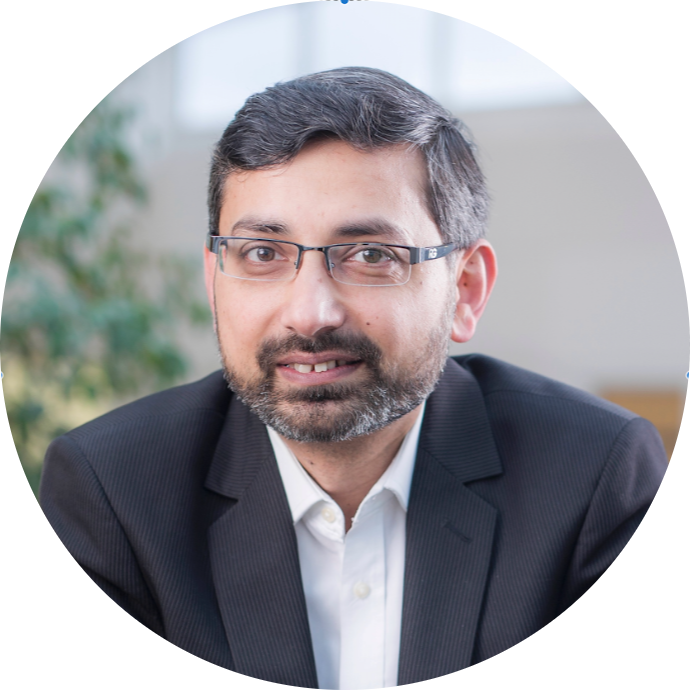
Keynote Speaker 1
Dr. Muhammad Imran, Fellow IEEE, Professor, University of Glasgow, UK
Talk Title: Technology for Digital Inclusion: connecting the unconnected
Biography: Professor Muhammad Ali Imran is a globally renowned expert in wireless communication systems, holding Fellowships in IEEE, IET, RSE, and other prestigious bodies. With an MSc (Distinction) and PhD from Imperial College London, he leads the James Watt School of Engineering and heads a major research hub in communications, sensing, and imaging. His influential work in self-organized cellular networks and energy-efficient communications has shaped global standards. With 25+ years of experience, he has led major international projects, represents Scottish Higher Education globally, and consults on advanced 5G/6G technologies for industry and international bodies.
Abstract: Despite major progress in digital technology, one-third of the world still remains unconnected and excluded from its opportunities. Bridging this gap requires more than wider coverage—it calls for new ways of designing and sustaining technology for true inclusion. This keynote explores frugal, energy-efficient, and open communication systems that can empower underserved communities. Drawing on global connectivity efforts and advances in 6G, AI, and edge computing, it highlights how technology can become a real enabler of inclusion—connecting people, societies, and futures.

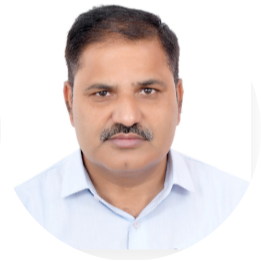
Keynote Speaker 2
Dr. Ram Bilas Pachori, FIEEE, Professor (HAG), Department of Electrical Engineering, Indian Institute of Technology Indore, Simrol, Indore, India
Talk Title: Advanced signal processing for EEG-based epilepsy detection
Biography: Ram Bilas Pachori is a Professor (HAG) at IIT Indore with M.Tech and Ph.D. from IIT Kanpur. His work focuses on signal and image processing, biomedical signals, BCI, AI, and machine learning. He has supervised 27+ Ph.D. students, delivered 300+ talks, published 386+ papers, authored a CRC Press book, and holds 11 patents. His research has over 20,000 citations (h-index 78). He is a Fellow of IEEE, INAE, IET, AAIA, IETE, and IEI, and an IEEE EMBS Distinguished Lecturer (2025–2026). He also serves on editorial boards of several major journals.
Abstract: Signal processing and machine learning based methods can be used to design intelligent systems in order to perform automated diagnosis of epilepsy from electroencephalogram (EEG) signals. In this talk, a proposed multivariate empirical wavelet transform and machine learning based intelligent system for epileptic seizure detection from multichannel EEG signals will be presented. The comparison of the proposed framework will be explained with the other existing methods for epileptic seizure detection.


Keynote Speaker 3
Dr. Frederic Dufaux, Fellow IEEE, Professor, Université Paris-Saclay, France Vice President (Technical Dir.), IEEE Signal Processing Society
Talk Title: Immersive visual communications: perspectives and challenges
Biography: Dr. Frédéric Dufaux is a CNRS Research Director at Université Paris-Saclay and head of the Telecom and Networking hub at L2S. An IEEE Fellow and current IEEE SPS Vice President for Technical Directions, he has over 30 years of experience in visual information processing, with previous roles at EPFL, MIT, and industry.
He has led major IEEE and EURASIP committees, chaired multiple ICIP, MMSP, and ICME events, and served as Editor-in-Chief of Signal Processing: Image Communication. Recognized with EURASIP, ISO, and NAAI awards, he is listed among the “World’s Top 2% Scientists.” Dr. Dufaux has 300+ publications, 25+ patents, and extensive contributions to video and imaging standards.
Abstract: Rapid advances in technology have made digital images and videos universal, but achieving truly lifelike and immersive visual experiences remains a major challenge. The human visual system perceives far richer color, brightness, and depth than today’s imaging systems can capture or reproduce. This talk explores recent research on hyper-realistic and immersive imaging.
First, it focuses on point clouds—an emerging 3D representation that lacks regular structure and is often sparse, making processing difficult. New learning-based methods for point cloud compression and quality assessment will be presented. Second, the talk covers high dynamic range imaging and tone-mapping operators, showing how semantic and contextual information can guide TMOs to better preserve perceptual cues, similar to expert photo editing.
Keynote Speakers- Day 2

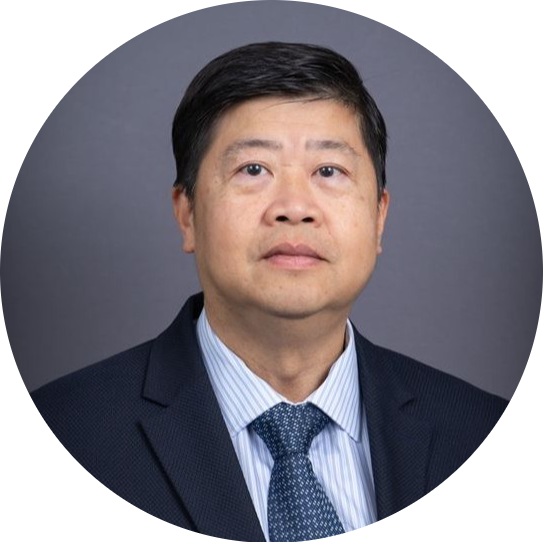
Keynote Speaker 4
Dr. Kin-Man (Kenneth) Lam Professor, The Hong Kong Polytechnic University, Hong Kong Vice President (Membership), IEEE Signal Processing Society
Talk Title: Efficient Deep Neural Network for Steel Surface Defect Detection and Applications
Biography: Prof. Kin-Man Lam received his M.Sc. from Imperial College London and his Ph.D. from the University of Sydney. He is a Professor in the Department of Electronic and Information Engineering at The Hong Kong Polytechnic University, where he has served since 1996.
He has held key roles in IEEE SPS and APSIPA, including IEEE SPS VP-Membership and former Chair of the IEEE Hong Kong Signal Processing Chapter. He has also been an editor for major journals such as IEEE Transactions on Image Processing and IEEE Signal Processing Magazine. His research focuses on image and video processing, computer vision, and human face analysis and recognition.
Abstract: Steel surface defect detection is crucial for manufacturing quality and rail-track safety. Missed defects can reduce product lifetime and even cause accidents. This talk highlights three key challenges—scale variation, shape variation, and detection efficiency—and presents a deep neural network with fused-attention mechanisms to address them. The method uses balanced feature fusion to handle multi-scale defects and attention modules to improve shape-sensitive localization and classification. The approach is also extended to rail-track defect detection, with real-world results demonstrated in a railway system.
 _
_
 _
_